
Normal Testosterone Levels in Men: What Your nmol/L Result Means
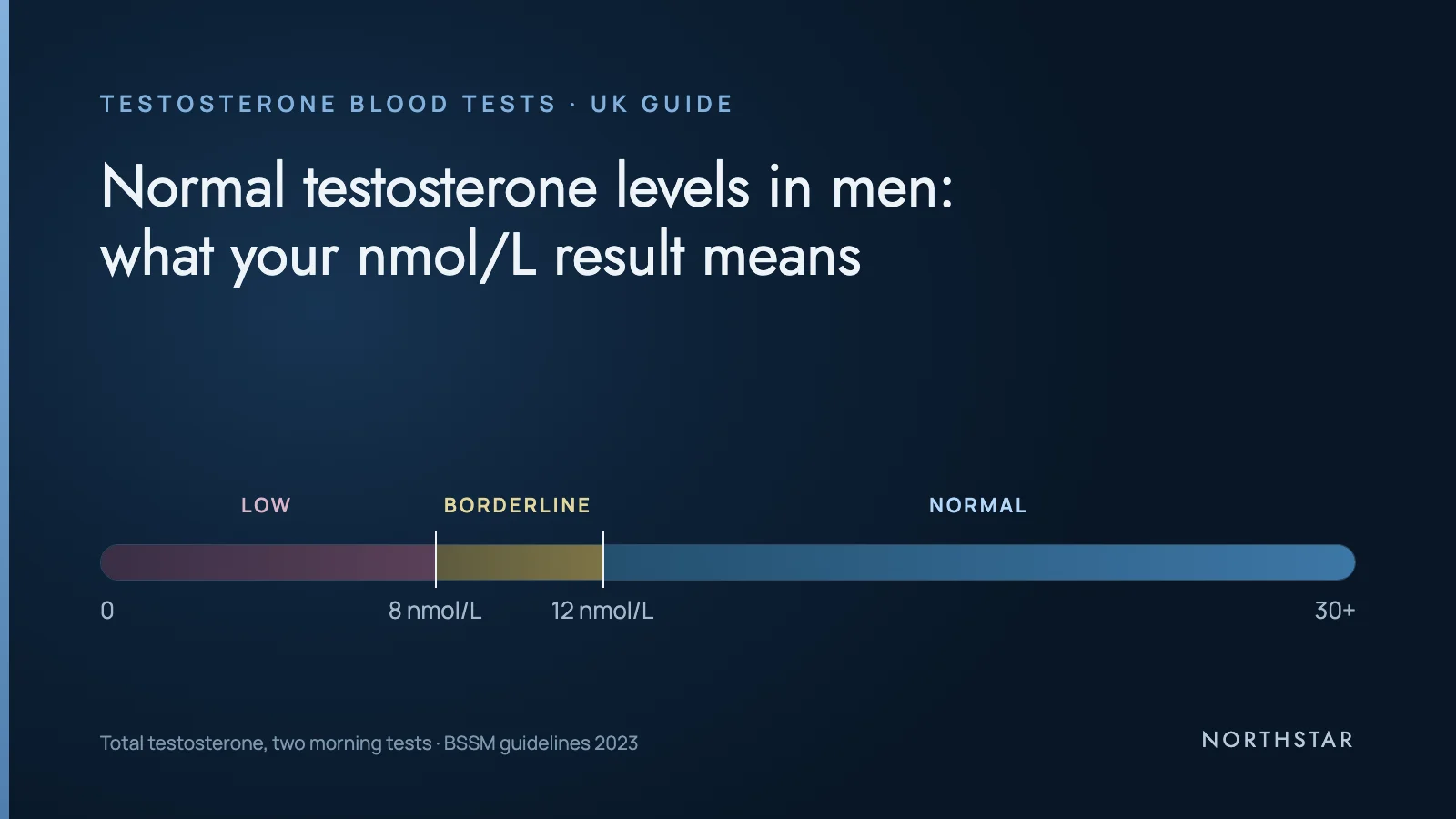
In the UK, a normal total testosterone level for an adult man is usually above 12 nmol/L. Below 8 nmol/L is clearly low. Between 8 and 12 nmol/L is a grey zone where symptoms, free testosterone and a repeat test decide what happens next. One number on its own is never a diagnosis.
Most testosterone charts online are American and use ng/dL, which makes UK results confusing. This guide explains what your result in nmol/L means, what can make it look falsely low, and when it’s worth speaking to a doctor.
Normal Testosterone Levels in Men: The Quick Guide
British Society for Sexual Medicine (BSSM) guidance uses these thresholds for men with symptoms. They assume two separate morning blood tests, taken between 7am and 11am.
| Total testosterone | What it usually means | Typical next step |
|---|---|---|
| Above 12 nmol/L | Normal. Testosterone is unlikely to be causing your symptoms. | Look for other causes |
| 8 to 12 nmol/L | Borderline. Depends on your symptoms and free testosterone. | Repeat test, check SHBG and free testosterone |
| Below 8 nmol/L | Low, if confirmed on a repeat morning test. | Find the cause and discuss treatment |
Lab reference ranges vary. Many UK labs print a lower limit of around 8 to 9 nmol/L and an upper limit of around 29 to 30 nmol/L. A result just inside the lab’s range can still be worth discussing if you have clear symptoms.
Converting nmol/L to ng/dL
UK labs report testosterone in nanomoles per litre (nmol/L). US labs and many websites use nanograms per decilitre (ng/dL). To convert, multiply nmol/L by 28.8.
| UK (nmol/L) | US (ng/dL) |
|---|---|
| 8 nmol/L | about 230 ng/dL |
| 12 nmol/L | about 350 ng/dL |
| 20 nmol/L | about 575 ng/dL |
| 30 nmol/L | about 865 ng/dL |
So when an American article says “300 ng/dL”, that’s roughly 10 nmol/L, which sits in the UK borderline zone.
Total Testosterone, Free Testosterone and SHBG
Your report may show more than one testosterone figure.
- Total testosterone is all the testosterone in your blood. This is the main number used for diagnosis.
- SHBG (sex hormone-binding globulin) is a protein that binds testosterone and holds it in reserve. Testosterone bound to SHBG isn’t readily available to your tissues.
- Free testosterone is the small fraction that isn’t bound. It’s usually calculated from total testosterone, SHBG and albumin. BSSM guidance treats a free testosterone below 0.225 nmol/L (225 pmol/L) as low.
SHBG matters most when total testosterone is borderline. Carrying extra weight or having insulin resistance tends to lower SHBG, so total testosterone can look low while free testosterone is fine. Getting older, liver conditions and an overactive thyroid tend to raise SHBG, so total testosterone can look normal while free testosterone is low.
Normal Testosterone Levels by Age
There’s no separate UK “normal range” for each age. The same thresholds apply to a man of 30 and a man of 70.
Testosterone does tend to drift down slowly from middle age, often quoted at around 1% a year. But much of that fall is linked to weight gain, type 2 diabetes and other health problems rather than age itself. BSSM notes that over 80% of men keep normal testosterone levels into old age. A low result at any age deserves an explanation, not just “it’s your age”.
Why Your Result Might Look Falsely Low
Testosterone changes through the day and responds to what’s happening in your body. A single low result can be misleading. Common reasons include:
- Timing. Testosterone peaks in the morning and falls through the day. An afternoon sample can read lower.
- Eating first. A meal, especially a sugary one, can temporarily lower the result. Guidance suggests testing fasted where possible.
- Recent illness. Even a bad cold or a recent operation can lower testosterone for a while.
- Poor sleep or night shifts. Short or disrupted sleep is linked with lower levels.
- Medicines. Opioid painkillers and steroid tablets can both lower testosterone. So can past anabolic steroid use.
- Weight and alcohol. Extra body fat and heavy drinking are both linked with lower levels.
That’s why guidance recommends confirming a low result with a second early-morning test, ideally a few weeks apart.
What Happens if Your Testosterone Is Low?
A confirmed low level is the start of the conversation, not the end. A good assessment will:
- Check it’s real. A repeat early-morning sample confirms the result.
- Look for the cause. LH and FSH show whether the problem lies in the testes or in the brain’s signals to them. Some results need further tests or a specialist referral.
- Match it to symptoms. Low sex drive, fewer morning erections, tiredness and low mood all matter. Read more about the symptoms of low testosterone.
- Talk about fertility. Testosterone treatment can stop sperm production. If you want children now or in the future, that changes the plan.
- Agree a monitoring plan. If treatment is suitable, it comes with regular blood tests and reviews.
Sometimes the right answer isn’t testosterone at all. Better sleep, weight loss, cutting back on alcohol or reviewing a medicine can lift levels on their own.
How to Get Your Testosterone Checked in Northern Ireland
You can start with your GP, who can arrange morning blood tests and refer you if needed. Our guide on getting TRT on the NHS in Northern Ireland explains that route.
At Northstar in Belfast, two testosterone results are needed to confirm a low level. Your first test (£50) can be done in clinic or at home with our postal home hormone test kit. Hormone results usually come back within 48 hours, followed by a written report and a phone call.
If your first result is low, the full Northstar blood panel (£175) is taken early in the morning, when testosterone is highest. It confirms your level and checks for other causes of your symptoms. Already tested elsewhere? We accept Randox or NHS blood tests from the last 6 months if they cover the same markers.
See what testosterone testing and TRT cost at Northstar.
Worth knowing
- Above 12 nmol/L is normal. Below 8 nmol/L is low.
- 8 to 12 nmol/L needs free testosterone, SHBG and a repeat test.
- Test between 7am and 11am, ideally fasted, and confirm a low result.
- Never start, stop or change testosterone based on a number alone.
Frequently Asked Questions
What is a good testosterone level for a man in the UK?
Anything above 12 nmol/L on a morning test is considered normal under BSSM guidance. At that level, guidance doesn’t recommend testosterone treatment.
Is 10 nmol/L testosterone low?
It’s borderline. Whether it counts as low depends on your symptoms, your SHBG and free testosterone, and whether a repeat morning test gives a similar result.
Is 15 nmol/L testosterone normal?
Yes. 15 nmol/L is within the normal range. If you have symptoms, it’s worth looking for other causes such as sleep problems, stress, thyroid problems or low iron.
Do I need to fast before a testosterone blood test?
Ideally, yes. Guidance recommends a morning sample before 11am, taken fasting where possible, because food can temporarily lower the result.
Can testosterone levels go back up naturally?
Often, yes, if the cause is reversible. Losing excess weight, treating sleep apnoea, cutting back on alcohol and recovering from illness can all raise testosterone.
Next Step
If you have symptoms and want a clear answer, you can start with a home hormone test or book a consultation. Dr Salmon goes through your results with you, and treatment is only offered if it’s clinically appropriate.
Source: Hackett G, et al. The British Society for Sexual Medicine Guidelines on Male Adult Testosterone Deficiency, with Statements for Practice. World J Mens Health. 2023;41(3):508–537.