
What’s in the Full Northstar Blood Panel, and Why It Comes Before Treatment
Feeling tired, low or not yourself doesn’t automatically mean low testosterone. The same symptoms can come from an underactive thyroid, low iron, diabetes, poor sleep and many other things. Some of these need completely different treatment.
That’s why every Northstar patient has the full Northstar blood panel before any treatment is considered. This guide explains what the panel checks, why each part matters, and how to prepare.
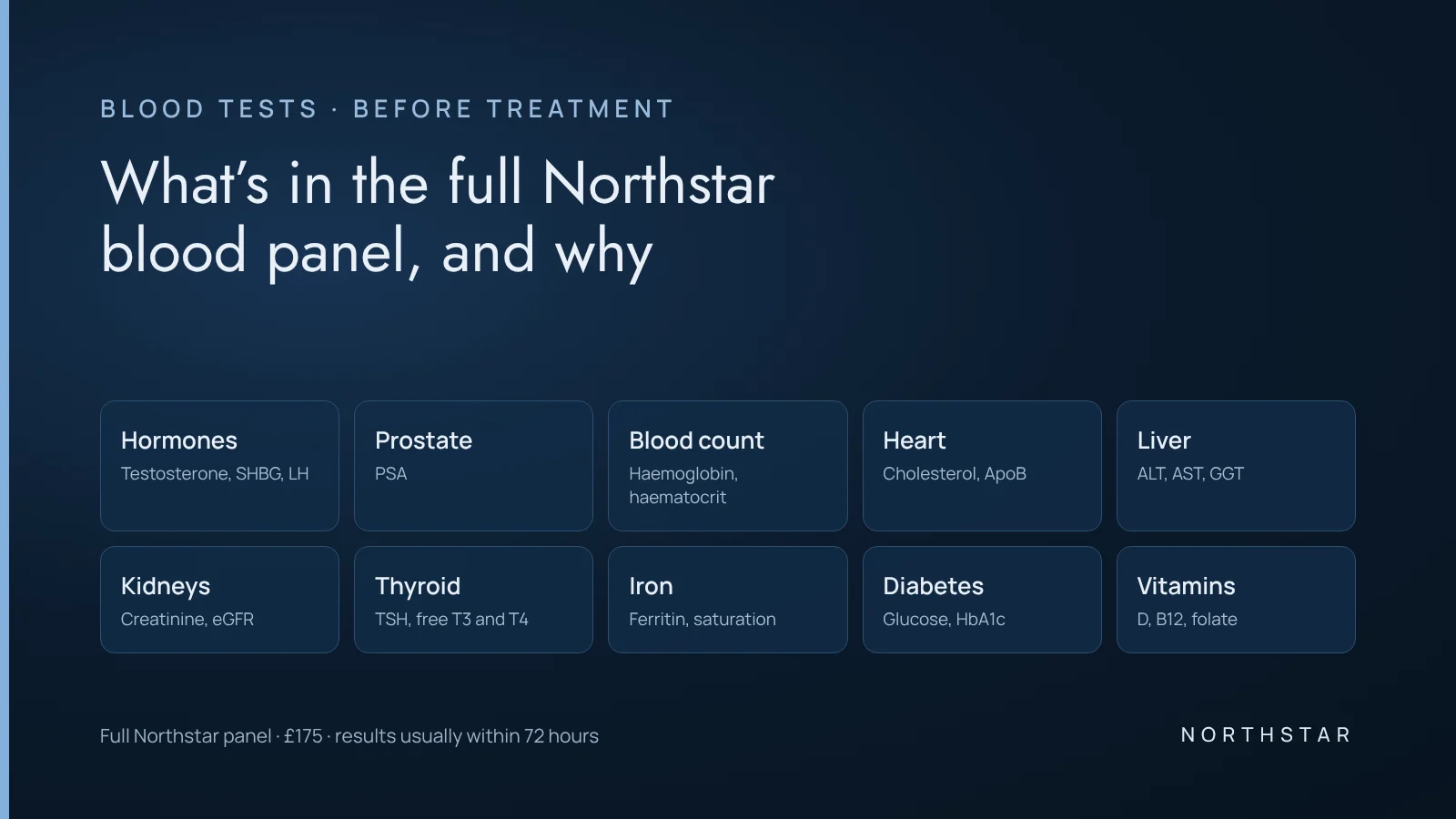
What the Full Northstar Panel Does
The full panel has three jobs:
- Confirm your testosterone level. UK guidance says low testosterone must be confirmed with a second morning blood test. If your first test was low, the full panel provides that second result.
- Look for other causes of your symptoms. It checks your thyroid, iron, blood sugar, vitamins and more.
- Give a baseline of your general health. If treatment is ever started, your doctor needs to know your starting point for things like your blood count, prostate (PSA), liver and heart health, so changes can be spotted early.
The panel costs £175. Testing is done by Randox Health, and results usually come back within 72 hours. You get a report explaining your results, followed by a phone call.
What’s Tested, Section by Section
Hormones
Testosterone, sex hormone-binding globulin (SHBG), free androgen index, luteinising hormone (LH), cortisol and DHEA-S.
Total testosterone is the main number used for diagnosis. SHBG and the free androgen index show how much testosterone is available for your body to use, which matters when a result is borderline. LH is a signal from the pituitary gland in the brain. It helps show whether a low level starts in the testes or in the brain, which changes what happens next.
Prostate health
Prostate-specific antigen (PSA).
PSA is a protein made by the prostate gland. A raised level can have several causes, including an enlarged prostate, infection or inflammation, and less commonly prostate cancer. BSSM guidance recommends checking prostate health before testosterone treatment is started and monitoring it during treatment. The full panel includes PSA so your doctor has a baseline from the start.
Full blood count
Haemoglobin, haematocrit, red blood cell count and indices, white blood cell count and types, and platelets.
A low blood count (anaemia) is a common cause of tiredness. Haematocrit measures how concentrated your red blood cells are. Testosterone treatment can raise it, so guidance recommends checking it before treatment and monitoring it afterwards.
Heart health
Cholesterol (total, LDL and HDL), triglycerides, apolipoproteins A-I and B, high-sensitivity CRP and a cardiovascular risk score.
These help build a picture of your long-term heart health. Low testosterone often goes hand in hand with other risks, such as excess weight and raised cholesterol, and these are worth knowing about whatever your testosterone level.
Liver and kidneys
Liver: ALT, ALP, AST, GGT, bilirubin and albumin. Kidneys: creatinine, eGFR, urea, uric acid and salts such as sodium, potassium, calcium and magnesium.
These show how well your liver and kidneys are working. They’re part of a safe baseline before any long-term treatment, and can point to other causes of feeling unwell.
Thyroid
TSH, free T3 and free T4.
An underactive thyroid can cause tiredness, low mood, weight gain and feeling the cold, which overlap closely with low testosterone symptoms.
Iron
Iron, ferritin, total iron binding capacity, transferrin and transferrin saturation.
Low iron can cause tiredness and poor concentration. High iron can also cause problems, including tiredness, and is worth picking up early.
Diabetes
Glucose and HbA1c.
HbA1c shows your average blood sugar over the last two to three months. Type 2 diabetes and low testosterone are closely linked, and BSSM guidance recommends checking testosterone in men with type 2 diabetes for this reason.
Vitamins and nutrition
Vitamin D, vitamin B12, folic acid and total antioxidant status.
Low vitamin D is common in Northern Ireland, especially over winter. Low B12 and folate can cause tiredness, low mood and pins and needles.
Muscle, bone and inflammation
Creatine kinase, CK-MB, myoglobin, bone markers and C-reactive protein (CRP).
These can show muscle strain or damage, bone health and general inflammation in the body.
Urine test
Glucose, protein, ketones, blood, nitrite and other markers.
A simple urine check can pick up signs of kidney problems, infection or raised blood sugar.
You can see the full list of markers on our blood tests page.
Why Every Patient Has It Before Treatment
Starting testosterone treatment without these checks could mean missing the real cause of your symptoms, or starting treatment that isn’t safe for you. The panel makes sure:
- Low testosterone is confirmed on a second morning test, not diagnosed from one result.
- Other conditions that cause similar symptoms are looked for and treated if found.
- Your doctor has a full baseline, so any treatment can be monitored safely.
Having the panel doesn’t commit you to treatment, and a consultation doesn’t guarantee it. If the results point to another cause, that’s what you’ll be advised about.
How to Prepare
The full panel is taken early in the morning, when testosterone is highest. To get an accurate result:
- Book a morning appointment, between 7am and 11am.
- Ideally, fast beforehand, drinking water only. The panel includes blood sugar and cholesterol, which are most accurate on a fasting sample.
- Sleep normally the night before and don’t test when you’re ill.
- Tell us about any supplements or medicines, especially biotin and hormone products.
Already Had Bloods Done?
If you’ve had a Randox or NHS blood test in the last 6 months that covers the same markers, you won’t need to repeat it. Send us your results and we’ll check what’s already covered.
Worth knowing
- The full panel costs £175 and results usually come back within 72 hours.
- It confirms your testosterone level with a second morning test.
- It checks prostate (PSA), thyroid, iron, blood sugar, vitamins, heart, liver and kidneys.
- Every patient has it before treatment, and it doesn’t commit you to treatment.
Frequently Asked Questions
How much does the full Northstar blood panel cost?
The full panel is £175. It can also be chosen as part of a men’s health check.
How long do the results take?
Results for the full panel usually come back within 72 hours. You get a written report and a phone call to explain them.
Do I need the full panel if my first test was normal?
Not usually. If your first testosterone result is normal, Dr Salmon will talk you through what else might explain your symptoms and whether any other tests would help.
What’s the difference between the full panel and the hormone review panel?
The hormone review panel (£50) is a focused hormone check, used for your first testosterone test. The full panel adds a wide general health profile and is needed before any treatment.
Next Step
To get started, you can order a home hormone test for your first result, or book a consultation at our clinic on the Malone Road, Belfast. See all our fees.
Source: Hackett G, et al. The British Society for Sexual Medicine Guidelines on Male Adult Testosterone Deficiency, with Statements for Practice. World J Mens Health. 2023;41(3):508–537.